#AI#Prompting
Popular
⭐ New#LLM#Prompt Engineering
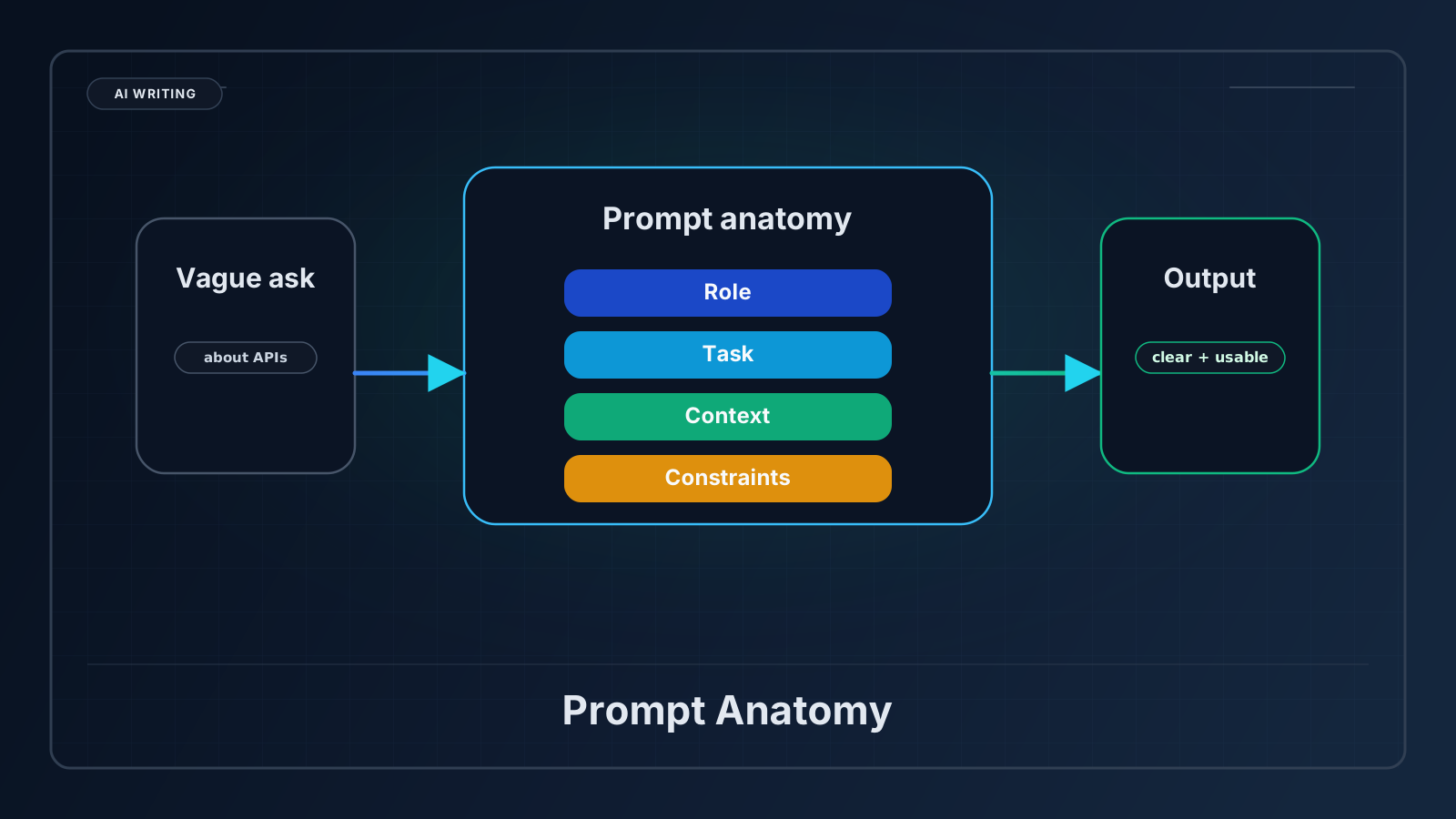
Prompt Anatomy Simulator
See how system role, context, examples, constraints, and output format reshape LLM responses. Learn what makes a prompt reliable instead of generic.
Labs
Watch how embedding, vector search, and top-K retrieval ground LLM responses in real documents — and see exactly what happens without them.
Watch how retrieval-augmented generation grounds LLM responses in real documents.
What was Apple's Q4 2024 revenue and net income?
Awaiting pipeline…
Understanding the basics in 30 seconds
Retrieval-Augmented Generation (RAG) is an architecture that connects a large language model to an external knowledge base at inference time. Instead of relying solely on what the model learned during training, RAG retrieves relevant documents from a vector database and injects them into the prompt as context before the LLM generates a response.
This solves three fundamental limitations of standalone LLMs: knowledge cutoff dates, lack of access to private or proprietary data, and the tendency to hallucinate when uncertain. With RAG, the model always has a grounded, current, and citable source to reason from.